

Caixin
Sep 07, 2012 02:01 PM

Bank Loan Tricks Stain, Strain Steel Sector
a

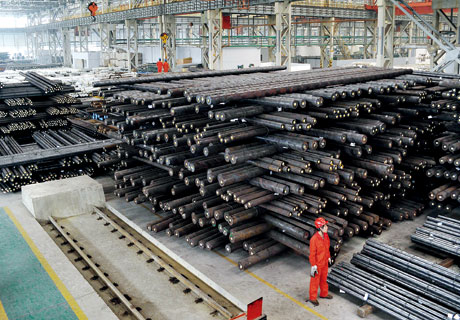
(Beijing) – A merchant surnamed Qiao has been wholesaling at the sprawling Lange Baiziwan Steel Market, northern China's largest steel trading center, since 2007.

Before this year, Qiao said, business was booming. Customers typically started queuing at daybreak, and deal-cutting continued until the shop closed at 9 p.m. Delivery trucks for Qiao's and other shops rolled through the trading center well into the night.

By August, however, the 20-hectare market in southeast Beijing had largely fallen silent. Most merchants closed their doors. Qiao's shop was one of few still open for the trickle of potential buyers who surveyed products but bought few, or none.

The scene has been repeated at steel trading centers across China where business hit the doldrums several months ago, confirming forecasts by investment bank economists and market analysts for weaker businesses after a slowdown in 2011.

And although steel product prices have fallen sharply of late – rebar was selling for 3,500 yuan per ton in September, down from 5,000 yuan last year – sales are still slow and the industry's upstream businesses, including trading companies and steel factories, are failing to pay debts.

Steel sector companies have found themselves particularly vulnerable as economic growth slows in China because many played games with credit lines, bank loans, inventory collateralization and multi-company borrowing schemes.

Some steel manufacturers and trading firms used product inventories as collateral for bank loans, then increased their money in hand by convincing another bank to exchange the lenders' acceptance bills for cash.

The strategy worked apparently because bankers between 2007 and 2010 too often failed to verify that acceptances were specifically tied to trading, said a Bank of China loan officer. The oversight apparently "fueled risky and speculative activities on the part of steel companies," he said.

Some steelmakers and traders, not satisfied with their own business realm, used stretched-out loans to buy speculative real estate in hopes of raising even more money, said Zhang Changhe, manager of the trader Beijing Ruisen Steel Co. Ltd.

Shanghai steel companies were especially busy investing in property with money raised by manipulating bank loans, said Wei Zheng'an, a steel analyst at Guotai Junan Securities.

Trade Tricks

Steel traders alone last year borrowed about 1.89 trillion yuan from banks, accounting for 3.5 percent of the nation's 2011 loans in all categories, said Zhou Huarui, chairman of the Shanghai Steel Service Trade Association.

The strategy started unraveling, though, when steel prices fell and the value of collateralized steel products declined. Moreover, a real estate market cooldown since 2010 has trapped speculators including steel companies without cash needed to repay loans.

"Their money is tied up in the property market," Wei said.

Another trick commonly employed by Shanghai steel companies, said a bank loan officer, involved defrauding banks by using the same batch of products as collateral for multiple loans. At times, several steelmakers would obtain separate loans using the same inventory as collateral.

Lenders were easily duped because steel, like many commodities, is not a fixed asset that can be easily identified when used as collateral. Bankers have no way to accurately trace any particular inventory or its ownership to determine whether another borrower used it as collateral.

You've accessed an article available only to subscribers
VIEW OPTIONS
Share this article
Open WeChat and scan the QR code
GALLERY




