

Nobel Recognizes Science Leading to AbbVie's Top-Selling Drug
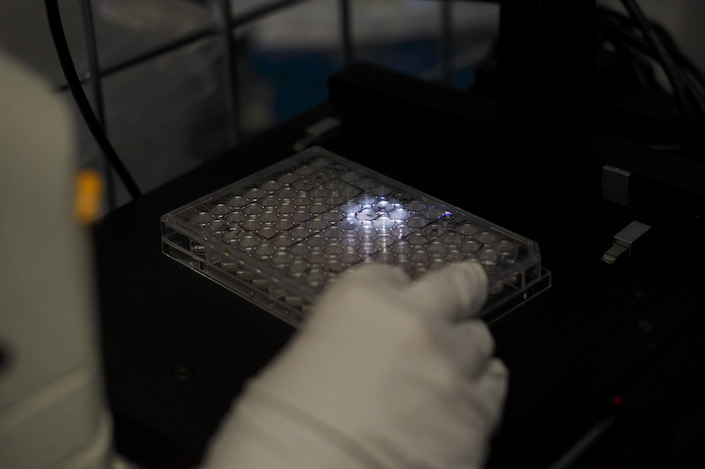
(Bloomberg) — Research that led to development of the world’s top-selling drug, AbbVie Inc.’s Humira treatment for immune conditions, was recognized with the Nobel Prize in chemistry for three scientists.
Frances Arnold and George Smith of the U.S. and Gregory Winter of the U.K. won the 2018 prize for work that showed scientists and drug developers how to force proteins to evolve. The researchers have “taken control of evolution and used it for purposes that bring the greatest benefit to humankind,” the Royal Swedish Academy of Sciences said Wednesday in a statement.
Researchers have learned to use the process of evolution to develop new forms of molecules that are used to manufacture everything from biofuels to pharmaceuticals, such as Humira, which sold about $18 billion last year. Natural evolution occurs when animals, plants and other organisms reproduce in varying forms that either fail or thrive, depending on surrounding conditions and their fitness for their environment.
Half of the prize went to Arnold, a chemical engineering professor at the California Institute of Technology who in 1993 began experiments allowing her to direct the evolution of enzymes, proteins that speed reactions in the body’s cells and tissues. Arnold devised methods for reshuffling the genes that make enzymes, and then seeing which new recipes produced promising effects.
The other half went to Smith, an emeritus biology professor at the University of Missouri, and Winter, of the MRC Laboratory of Molecular Biology in Cambridge, England. Their work involved the development and use of a technique called phage display to direct the evolution of antibodies, immune proteins that can be used to block biological processes, into various forms.
Numerous Diseases
The first antibody developed by this method as a drug was adalimumab, or Humira, approved for the U.S. in 2002. It’s used to treat a number of conditions in which the immune system goes awry, including rheumatoid arthritis, psoriasis, inflammatory bowel disease and others.
“We are in the early days of directed evolution’s revolution which, in many different ways, is bringing and will bring the greatest benefit to humankind,” according to the academy’s statement.
Research that engendered new therapies was also recognized with the Nobel for medicine earlier this week when two scientists, James Allison of the U.S. and Tasuku Honjo of Japan, won the award for work in immune oncology. The field has resulted in new treatments from Merck & Co., Bristol-Myers Squibb Co. and other drugmakers for lung cancer and other hard-to-treat tumors.


- 1Cover Story: China’s AI Boom Is Rewiring Its Power Grid
- 2China Auditor Exposes Local Governments Faking Debt Cleanups
- 3Iran Clears Chinese Cargo Ships as Strait of Hormuz Sees Chaotic Reopening
- 4China Rolls Out 15-Point Plan to Woo Foreign Capital
- 5Chinese Business Group Urges EU to Ease New Foreign Investment Restrictions

- 1Power To The People: Pintec Serves A Booming Consumer Class
- 2Largest hotel group in Europe accepts UnionPay
- 3UnionPay mobile QuickPass debuts in Hong Kong
- 4UnionPay International launches premium catering privilege U Dining Collection
- 5UnionPay International’s U Plan has covered over 1600 stores overseas

 Sign in with Google
 Sign in with Facebook
 Sign in with 财新