

Central Bank to Keep Liquidity Stable While Reining in Financial Risks
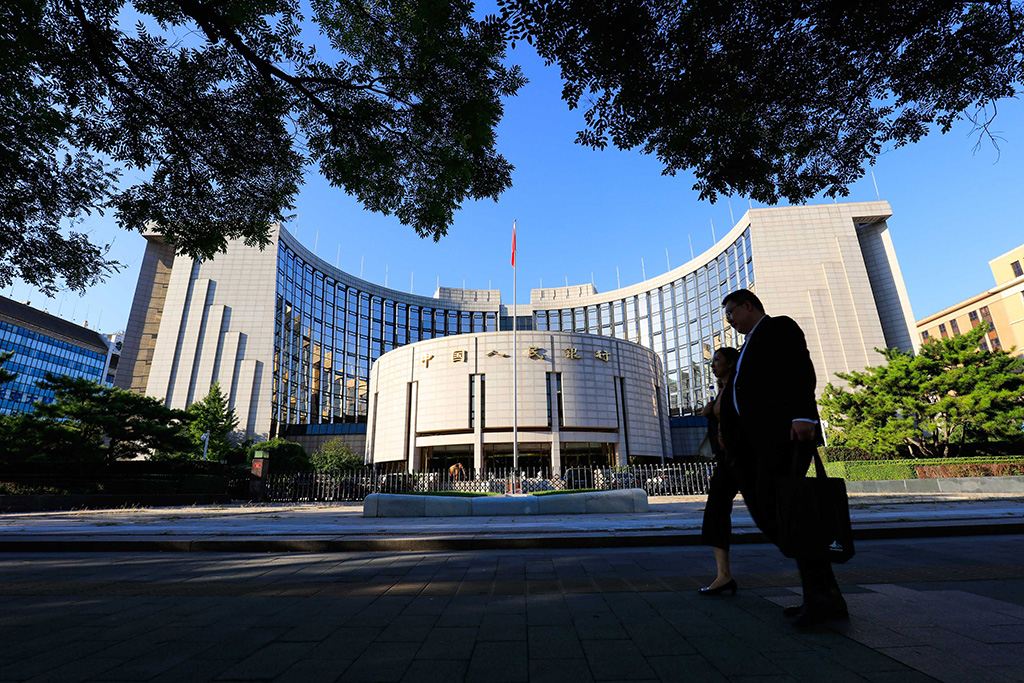
(Beijing) -- China’s central bank said it will maintain a prudent and neutral monetary policy, keeping market liquidity stable while reining in excessive financial leverage and risks.
In its quarterly monetary policy statement, the People’s Bank of China disavowed any policy move to tighten liquidity. After the central bank’s balance sheet contracted by a total of 1.1 trillion yuan in February and March, concerns arose that China was putting the squeeze on liquidity.
The first-quarter balance-sheet decline was mainly because of seasonal factors as deposits left the banking system to help fund construction activities, the bank said. The central bank intends to provide necessary liquidity support for "reasonable growth of credit" to keep the economy adequately funded, according to the quarterly policy report.
At the same time, the bank said it will step up efforts to strengthen oversight of shadow banking and speculative investments. Since late last year, regulators have imposed a series of measures to step up regulation of the massive shadow banking sector, including wealth management. The credit-rating company Moody’s Investors Services estimated that China’s shadow banking assets grew 21% in 2016 to 64.5 trillion yuan ($9.4 trillion).
According to the policy statement, the bank intends to take a flexible approach to maintain reasonable credit growth and seek balance between ensuring stable liquidity supply and pushing to deleverage and rein in shadow banking.
The central bank also said it will further improve the Macro Prudential Assessment system to keep a lid on fast-growing, off-the-books credit offerings. The MPA is a framework adopted at the beginning of this year to gauge risks in bank-credit exposure.
The PBOC highlighted risks linked to credit flows for speculative housing purchases. China’s top banking regulator, Guo Shuqing, warned in April that property-related loans were “excessive” and potentially risky. Such credits accounted for more than one-third of China’s 110 trillion yuan of outstanding debt.
China’s monetary authority has increasingly adopted longer-term policy tools to manage market liquidity this year. On Friday, the central bank again stayed out of routine daily open-market operations, the fifth time in two weeks. Instead, it injected 459 billion yuan ($66.52 billion) into the financial system through a medium-term lending facility.
By the end of March, China’s broad measure of money supply that covers cash in circulation and all deposits, or M2, rose 10.6% from a year earlier to 160 trillion yuan. The country set an annual growth target of 12% for M2.
Contact reporter Han Wei (weihan@caixin.com)



- 1Hitachi Energy Invests $300 Million to Expand Transformer Production in China
- 2U.S. Opens Patent Probe Into Chinese Battery-Maker EVE Energy
- 3Commentary: The Real Flaw in China’s AI Strategy
- 4Chinese Robot-Maker Unitree Soars 629% in Shanghai Debut
- 5Cover Story: Unmasking the Architect of a Global Cybercrime Empire

- 1Power To The People: Pintec Serves A Booming Consumer Class
- 2Largest hotel group in Europe accepts UnionPay
- 3UnionPay mobile QuickPass debuts in Hong Kong
- 4UnionPay International launches premium catering privilege U Dining Collection
- 5UnionPay International’s U Plan has covered over 1600 stores overseas

 Sign in with Google
 Sign in with Facebook
 Sign in with 财新